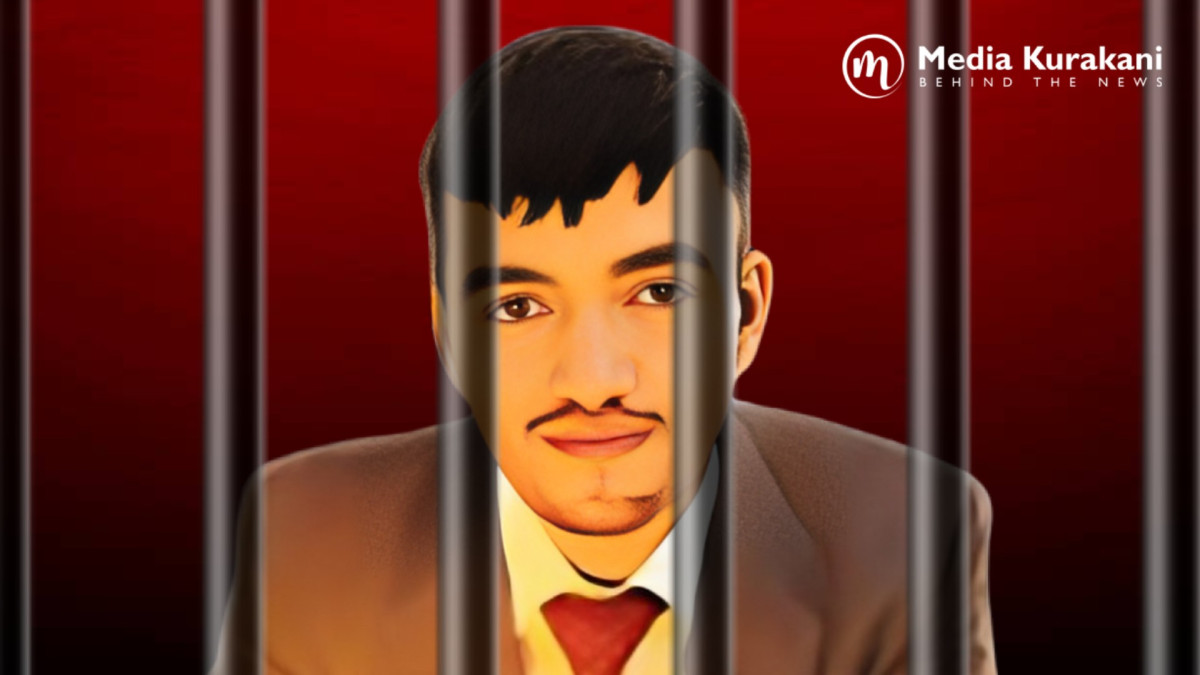

Man Bahadur Karki (29) stands barefoot inside the iron bars of the Metropolitan Police Circle, Durbarmarg.
The ground floor of the station, located near Narayanhiti Palace Museum, is enclosed by iron shutters and rods. Karki appeared somber.
“I was working at a hotel when two police officers arrived,” said Karki, who has been in custody for four days. “They told me I needed to come for questioning, took me to the Cyber Bureau, and then brought me here (to Durbarmarg Police Circle). I haven’t been able to return to work since.”
According to Karki, a call was made from the Cyber Bureau to his sister-in-law on the morning of August 20. The police inquired about the phone number, and when they learned it belonged to her husband, they asked him to visit the Bureau.
Once Karki’s brother, Subash, arrived at the Bureau, police showed him a Facebook account and asked, “Whose account is this?” It belonged to Man Bahadur Karki. The police then asked to be taken to Karki’s location. Subash led them to Mahabauddha, where the Karki family runs a momo stall.
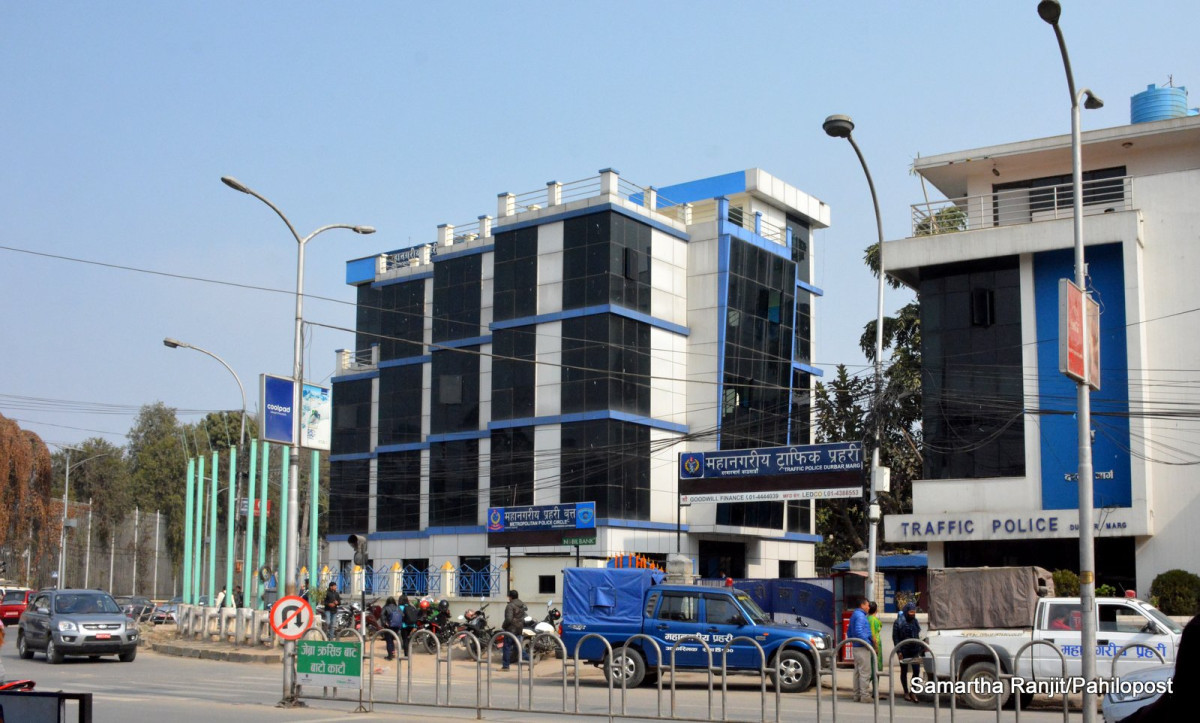
At around 4 PM, two Cyber Bureau officers arrested Man Bahadur and took him to their office in Bhotahiti. He was then formally issued an arrest warrant and taken to Durbarmarg Police Circle after securing five days of remand from the court. On Tuesday, the Kathmandu District Court extended his remand by three more days for further investigation.
Karki has been charged under Section 47 of the Electronic Transactions Act, 2006.
The 'Crime' on Facebook
So, what exactly did Karki do on Facebook to find himself in police custody?
Karki, an active user of social media, has been critical of the ruling Communist Party of Nepal-Unified Marxist Leninist (CPN-UML) and its chairperson, Prime Minister KP Sharma Oli. His criticism on Facebook is cited as the primary reason for his arrest, a point corroborated by police officials.
Cyber Bureau spokesperson Superintendent of Police (SP) Deepak Raj Awasthi stated that Karki had been arrested for spreading misinformation about "respected public figures." “He was found disseminating false information and defamatory content about distinguished individuals,” said SP Awasthi. "His Facebook account clearly shows this."
Karki has 67,000 followers on his Facebook account under the name "Dolkhali Kushal Karki Shailunge." He has regularly posted content criticizing the government, particularly Prime Minister Oli. His posts often address various public issues and criticisms of the government.
His most recent post was a video uploaded at 7:11 PM on August 27, showing slogans against Sher Bahadur Deuba, leader of the Nepali Congress, during 'Gaura Parva' celebrations. According to Cyber Bureau officials, it was this post that led to his arrest. The video, taken during the Gaura Parva event on August 26 in Tundikhel, featured protests against both PM Oli and Congress leader Deuba.
A Fearful Government
On the surface, Karki's arrest seems like an isolated incident, but the repetition of similar cases in recent days signals a government growing fearful of dissenting voices.
For instance, on August 26, three youths were arrested for chanting slogans against Prime Minister Oli and Congress Party leader Sher Bahadur Deuba. They were charged with offenses against public peace, only to be released on bail four days later due to widespread pressure.
Just the next day, on August 27, police in Kailali arrested Pratik Joshi and Rachit Shah for posting comments on Facebook critical of Congress leader Deuba and his wife, Foreign Minister Arzu Rana Deuba. After significant public outcry, the police released them.
Earlier, on August 16, Ramesh Bahadur Rawal, a 21-year-old from Bajura, was arrested for calling PM Oli "corrupt" on Facebook. He now faces charges under Nepal's cybercrime laws.
Global Concern: The Right to Dissent and Free Speech
This case brings into focus a larger concern about the freedom of expression, which is a fundamental human right under international law, including the Universal Declaration of Human Rights (UDHR) and the International Covenant on Civil and Political Rights (ICCPR).
Nepal, being a signatory to these treaties, is expected to uphold these rights, including the freedom to criticize public figures without fear of reprisal. Arrests like Karki's suggest growing challenges in maintaining a balance between state security and individual freedoms, a tension seen in many countries today.
Digital rights activists and legal experts in Nepal have expressed concern over the state’s increasing intolerance toward online dissent. Digital Rights Nepal’s chairperson, Santosh Sigdel, pointed out that the arrest of citizens over social media posts reflects a broader trend of government overreach. "The right to critique leaders and governments is a cornerstone of any democracy," Sigdel commented. "The current crackdown on social media activities is a worrying sign of growing authoritarian tendencies."
The Role of Social Media in Political Expression
Globally, social media serves as a key platform for political expression, allowing citizens to hold their governments accountable. Nepal is no exception. However, this growing space for dialogue and dissent is also facing suppression. Karki’s arrest indicates the Nepali government’s tightening grip on online speech, following a pattern observed in other countries like Turkey and Myanmar, where governments have been increasingly restrictive toward online criticism.
Karki’s brother, Subash, speculates that his arrest might also be linked to a recent "Unfollow KP Oli" campaign on social media, which gained momentum after a clash between supporters of Kathmandu Metropolitan City Mayor Balen Shah and those of Prime Minister Oli. During the campaign, PM Oli reportedly lost over 43,000 followers in just two days. “It’s not just about sharing the Tundikhel video,” Subash stated. “It might also be because of his involvement in the unfollow campaign.”
International Repercussions and Human Rights
The international community, including organizations like Amnesty International and Human Rights Watch, continues to emphasize the importance of protecting free speech, particularly in digital spaces. As Nepal navigates its evolving digital landscape, cases like Karki’s may attract scrutiny from global human rights observers. Governments that suppress free expression, especially online, risk damaging their democratic reputation on the global stage.
Meanwhile, in Nepal’s House of Representatives, lawmakers from the Rastriya Swatantra Party (RSP), including MPs Sobita Gautam and Ganesh Parajuli, have raised the issue of Karki’s arrest. Addressing Parliament, Gautam questioned the democratic integrity of charging citizens over social media posts. “Is it democratic to file cases simply for sharing a video that shows citizens expressing their dissatisfaction with the government?” she asked.
MP Parajuli also demanded Karki’s unconditional release, calling the government's action a “dictatorial tendency.” “How many more youths does this government plan to imprison just for raising slogans?” he queried.
International Parallels and Growing Concerns
These incidents, including Karki’s case, raise concerns about the shrinking space for free expression in Nepal. Human rights advocates and international bodies have been paying close attention to the increasing government response to online criticism. This crackdown parallels global trends in countries where social media and digital spaces are seen as threats to governmental authority.
On August 31, police also arrested Ruby Khan and eight others protesting against the appointment of a provincial minister implicated in the murder of Nirmala Kurmi. The protestors were marching from Maitighar Mandala to Singh Durbar, demanding justice.
Yubaraj Ghimire, the Editor-in-Chief of Desh Sanchar; a Nepali Media platform points out that these actions indicate that freedom of expression in Nepal may be at risk. "No individual should be denied the right to express their views in a public forum," Ghimire said. "The government's actions appear politically motivated, which is not a good sign. This could signal a real threat to free speech."
Ghimire also noted that media coverage of Man Bahadur’s arrest was minimal, aside from reports in Desh Sanchar and Naya Patrika. After publishing the news, Desh Sanchar received a phone call from Nepal’s media regulatory body, the Press Council. "Our correspondent confirmed the news with the police before writing it. If it was inaccurate, the police should have issued a statement," Ghimire said. "That we received a call from the Press Council shows how governmental bodies are being directed by political parties. This is a dangerous situation for journalists and the profession itself."
Broader Implications: A Global Issue of Free Speech
The arrest of individuals like Karki for online activity signals a worrying trend that transcends Nepal. Around the world, democratic governments are grappling with the challenge of managing digital dissent while maintaining civil liberties. The crackdown on free speech via social media often sparks international outcry, and Nepal’s case could draw attention from global watchdogs advocating for the protection of freedom of expression.
Advocate Santosh Sigdel warns that such actions pose a direct threat to open dialogue, which is essential for a healthy democracy. “The growing arrests for social media posts are not just about silencing individuals—they represent an attack on the fundamental right to freedom of expression,” Sigdel says. “This creates a chilling effect, where public debate and criticism are stifled, harming the very fabric of democracy.”