
Dr. Kundan Aryal -
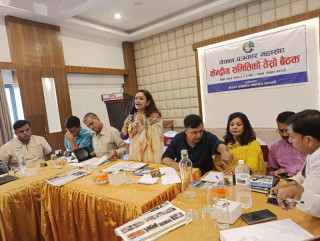
The Federation of Nepali Journalists (FNJ), in its statute, expresses its commitment to free press and professional and accountable journalism. On April 7, the FNJ held its historic elections of its chapters, provinces and central level bodies. This is the first time it has adopted direct election system in which its 13,000 members working in print, radio, TV and online media, and freelancers cast their ballots to pick its leadership. However, along with its new structures, the umbrella organisation of the Nepali journalists needs to review its agenda and working modality to meet the current challenges and achieve its stated goals.
Despite its democratic procedures and framework to choose the leadership, the FNJ is yet to content many competent and professional journalists by evolving itself as functional organisation devoted to the professional growth of media sector. Nepal's media landscape has significantly been transformed in terms of market size, mode of production and content diversity during the last three decades. In the changed scenario, it is not able to address the policy issues concerning the present and future of Nepali journalism.
Conducive atmosphere
With the nation ushering in democratic era in 1951, it witnessed atmosphere conducive to the development of journalism. Satya Narayan Bahadur Shrestha, a relatively less known figure, established Nepal Journalist Association (NJA) but it could not thrive as expected as Nepali journalism was still at its early phase of development. Later, senior politician Krishna Prasad Bhattarai reorganised and led the NJA three years before Nepali's first parliamentary elections. Bhattarai could not continue with NJA leadership because of his leading role in politics. Nevertheless, the organisation continuously moved on.Read Dr. Aryal's article in The Rising Nepal.